
Primary Antibody Matched Pairs

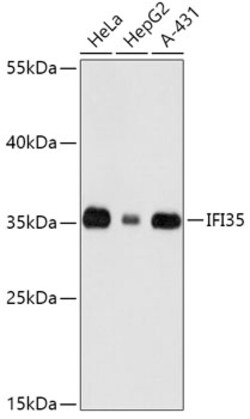
ABclonal Technology IFI35 Rabbit pAb

Enables identical protein binding activity. Involved in several processes, including macrophage activation involved in immune response, positive regulation of defense response, and regulation of signal transduction. Located in several cellular components, including cytosol, extracellular space, and nucleus.


Sino Biological Recombinant Human Integrin alpha V beta 3 Protein (His Tag)
A DNA sequence encoding the extracellular domain (Met1-Val992) of human ITGAV (P06756) was fused with a his tag at the C-terminus, constructed the plasmid 1; A DNA sequence encoding the extracellular domain (Met1-Asp718) of human ITGB3 (P05106) constructed the plasmid 2. The two plasmids were co-expressed and the human ITGAV&ITGB3 heterodimer was purified.
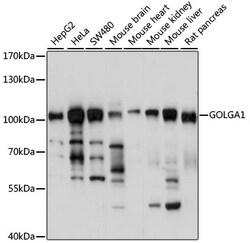
ABclonal Technology GOLGA1 Rabbit pAb
The Golgi apparatus, which participates in glycosylation and transport of proteins and lipids in the secretory pathway, consists of a series of stacked cisternae (flattened membrane sacs). Interactions between the Golgi and microtubules are thought to be important for the reorganization of the Golgi after it fragments during mitosis. This gene encodes one of the golgins, a family of proteins localized to the Golgi. This encoded protein is associated with Sjogrens syndrome.
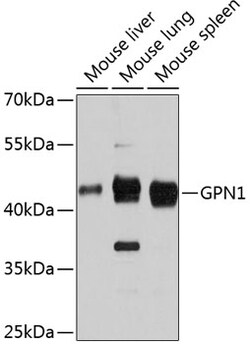
ABclonal Technology GPN1 Rabbit pAb
This gene encodes a guanosine triphosphatase enzyme. The encoded protein may play a role in DNA repair and may function in activation of transcription. Alternatively spliced transcript variants have been described.

Human APOH ELISA Pair Set 5PP (Sino Biological)
Each vial contains 45 ng of recombinant Human Apolipoprotein H / APOH. Reconstitute with 1 mL dilution buffer. After reconstitution, store at -20℃ to -80℃ in a manual defrost freezer. A seven-point standard curve using 2-fold serial dilutions in dilution buffer, and a high standard of 4000 pg/mL is recommended.

Sino Biological Recombinant Human Cx3cr1 Protein (VLP, Flag & Strep Tag)
A DNA sequence encoding the Human CX3CR1-VLP (P49238) (Met1-Leu315,thermostabilizing mutations) was expressed, with a Flag tag at the N-terminus, and a strep tag at the C-terminus.

Meso Scale Discovery R-PLEX Human GAD2/GAD-65 ASY
The Meso Scale Discovery GAD2-GAD-65 kit is a multiplex immunoassay that measures GAD65 and GAD67 autoantibodies in human serum and plasma It uses electrochemiluminescence detection technology and provides quantitative results in under 5 hours This assay kit contains all necessary reagents and plates for analyzing autoantibodies implicated in type 1 diabetes and other autoimmune conditions With high sensitivity and specificity it enables the differential detection of GAD65 and GAD67 autoantibodies which can aid in disease diagnosis and progression monitoring The kit has a testing capacity of 96 wells and shows minimal cross-reactivity and interference


Bioss CD58 Monoclonal Antibody
CD58 Primary Antibody Unconjugated Host Species Rabbit Target Species Human Clonality Monoclonal Applications WB FCM IP RecombinantConcentration 1ug/ul Size 100 ul Storage Buffer 10mM phosphate buffered saline(pH 7 4) with 150mM sodium chloride 0 05% BSA 0 02% sodium azide and 50% glycerol

Medchemexpress LLC S100A8-S100A9 Hetero 20ug
Recombinant mouse S100A8-S100A9 heterodimer protein (His-tagged), expressed in E. coli and purified for use in biochemical and immunological studies of inflammation and innate immunity. The protein is characterized by defined molecular weight bands on SDS-PAGE and supplied in a small-format vial suitable for low-volume assays.
- High purity suitable for biochemical and immunological assays.
- N-terminal 6xHis tag for purification and detection.
- Derived from mouse sequences for species-relevant studies.
- Expressed in E. coli for reproducible recombinant production.
- Provided in a 20 μg size for low-volume experiments.
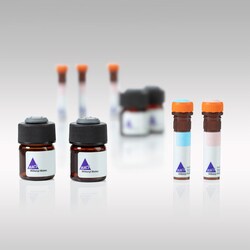
Miltenyi Biotec, Inc. CD79b-VioBright FITC, h, REA120, 100 t
Identification and enumeration of CD79b+ cells by flow cytometry.
This product is subject to the following: Miltenyi Biotec, Inc. Terms and Conditions of Sale For Products and Services
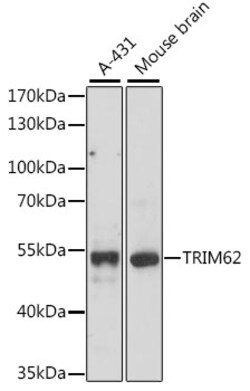
ABclonal Technology TRIM62 Rabbit pAb
Enables identical protein binding activity, transcription coactivator activity, and ubiquitin-protein transferase activity. Involved in several processes, including negative regulation of viral transcription, positive regulation of NF-kappaB transcription factor activity, and positive regulation of antifungal innate immune response. Is active in cytoplasm.

ABclonal Technology CD96 Rabbit mAb
CD96 (cluster of differentiation 96) belongs to the IgG (immunoglobulin) superfamily receptors It is expressed in the spinal cord kidney trachea digestive tissues prostate placenta bone of adults and fetal brain and liver This gene is located on human chromosome 3q13 The protein encoded by this gene belongs to the immunoglobulin superfamily It is a type I membrane protein The protein may play a role in the adhesive interactions of activated T and NK cells during the late phase of the immune response It may also function in antigen presentation Alternative splicing occurs at this locus and two transcript variants encoding distinct isoforms have been identified
AdipoGen IL-1alpha (mouse) Matched Pair Detection Set (1 Set)
Matched Pair Detection Set. Detects mouse IL-1alpha. Does not detect human IL-1alpha or mouse IL-1beta. Colorimetric assay. Sample Type: Cell Culture Supernatant. Range: 15.6 to 2000pg/ml. Sensitivity: 10pg/ml. IL-1alpha lacks a signal peptide and is secreted by an unconventional, endoplasmic reticulum-Golgi-independent mechanism. IL-1alpha was reported to be more widely and constitutively expressed and has intracellular functions, but also acts locally in a membrane-bound form by activating IL-1R1. Additionally, passive release of IL-1alpha upon cell death can trigger a sterile inflammatory response to dying cells. Recently it has been observed that all activators of the inflammasome NLRP3/NALP3 induce the simultaneous secretion of IL-1alpha and IL-1beta. Although most activators fully rely on the inflammasome for IL-1alpha secretion, some induce the processing and secretion of IL-1alpha in an inflammasome-independent manner.

Biotium PLAP (Placental Alkaline Phosphatase)(ALPP/238), CF740 conjugate, 0.1mg/mL
PLAP is a tissue specific, trophoblast-derived, 70 kDa, glycosyl-phosphatidylinositol (GPI)-anchored, dimeric, Zn2 metallo glycoprotein that catalyzes the hydrolysis of phosphomonoesters into an inorganic phosphate and an alcohol. It is present in the placenta and serum of pregnant women and in high frequency in gynecological and testicular cancers and in lower frequency in other tumors. The three tissue-specific AP's in humans, PLAP, germ cell AP (GCAP) and intestinal AP, are 90-98% homologous. Non-tissue specific AP is found in kidney, liver and bone. This MAb binds equally well to all common allelic variants (S, F, FS and I) of PLAP as to AP from normal human testis. This MAb can be used both as coating as well as tracer antibody in the same ELISA to detect PLAP in serum of S, F, FS and I phenotypes.Primary antibodies are available purified, or with a selection of fluorescent CF Dyes and other labels. CF Dyes offer exceptional brightness and photostability. Note: Conju
Genscript Corporation CD27 Ligand/CD70 Fc Chimera H
CD70 (Cluster of Differentiation 70) is a protein that in humans is encoded by CD70 gene CD70 is a ligand for CD27 The CD70-CD27 pathway plays an important role in the generation and maintenance of T cell immunity in particular during antiviral responses Upon CD27 binding induces the proliferation of costimulated T-cells and enhances the generation of cytolytic T-cells The CD70 protein is expressed on highly activated lymphocytes (like in T- and B-cell lymphomas) It is therefore suggested that anti-CD70 antibodies might be a possible treatment for CD70 positive lymphomas as normal lymphocytes have low CD70 expression