
Protein Labeling Reagents

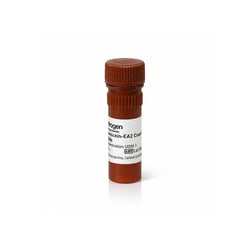
Thermo Scientific™ FL - eA2 Peptide, 100μM
Contain known interaction motifs and are labeled with fluorescein

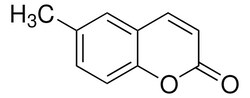
Sigma Aldrich 6-Methylcoumarin
MilliporeSigma Sigma Organics products encompass a wide range of quality reagents, solvents, catalysts, and building blocks for organic synthesis. From benchtop discovery to process development and scale-up, Sigma Organics solutions are built to meet the needs of synthetic chemists.


Molecular Probes™ 7-Amino-4-Methylcoumarin, reference standard
7-Amino-4-methylcoumarin (AMC) can be used as a fluorescence reference standard for AMC-based enzyme substrates including AMC-based caspase substrates. | 175.2 g/mol
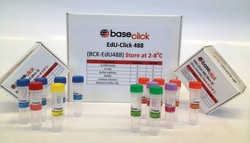
Sigma Aldrich In Vivo Edu Click Kit 594
MilliporeSigma Sigma Organics products encompass a wide range of quality reagents, solvents, catalysts, and building blocks for organic synthesis. From benchtop discovery to process development and scale-up, Sigma Organics solutions are built to meet the needs of synthetic chemists.
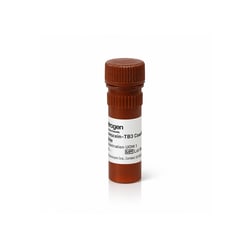
Thermo Scientific™ FL - TB3 Peptide, 100μM
Contain known interaction motifs and are labeled with fluorescein

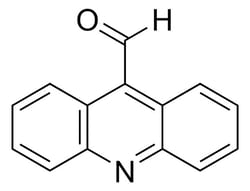
Sigma Aldrich Acridine-9-carboxaldehyde
MilliporeSigma Sigma Organics products encompass a wide range of quality reagents, solvents, catalysts, and building blocks for organic synthesis. From benchtop discovery to process development and scale-up, Sigma Organics solutions are built to meet the needs of synthetic chemists.
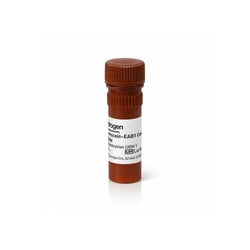
Thermo Scientific™ FL - EAB1 Peptide, 100μM
Contain known interaction motifs and are labeled with fluorescein
Sigma Aldrich 2,3-Naphthalocyanine
MilliporeSigma Sigma Organics products encompass a wide range of quality reagents, solvents, catalysts, and building blocks for organic synthesis. From benchtop discovery to process development and scale-up, Sigma Organics solutions are built to meet the needs of synthetic chemists.

Promega HaloTag™ Alexa Fluor™ 660 Fluorescent Ligand
The HaloTag™ Technology enables covalent protein labeling and immobilization in vivo and in vitro.
Aat Bioquest 6-HEX, SE [6-Carboxy-2',4,4',5',7,7'-hexachlorofluorescein, succinimidyl ester] *Single Isomer*
6-HEX, SE is the amine-reactive succinimidyl ester of 6-HEX acid. It is widely used in nucleic acid sequencing and related research.


Biotium 5-CARBOXYTetramethylrhodamine, SINGLE IS
Free acid form of 5-TAMRA (5-Carboxytetramethylrhodamine, single isomer). Properties: Ex/ Em (MeOH) = 540/565 nm; Dark red solid soluble in DMSO, DMF, or MeOH C 25 H 22 N 2 O 5; MW: 430.5; [91809-66-4]
Biotium Sulforhodamine 101-PEO3-amine (Texas Red-PEO3-amine)
Sulforhodamine 101-PEO 3 -amine has a long water-soluble spacer separating the dye and the amine group. The dye can be coupled to activated carboxy groups or sulfonyl chlorides.Properties: Ex/Em (MeOH) = 583/603 nm; Dark purple solid soluble in DMSO or DMF; Store at 4°C and protect from light; C 39 H 48 N 4 O 9 S 2; MW: 780.95
Biotium Eosin-5-isothiocyanate
Eosin-5-isothiocyanate is a good photosensitizer and can be used to selectively label amines. It has a quantum yield of 0.57 for singlet oxygen generation, which makes it useful for photoconversion of electron-rich materials such as diaminobenzidine (DAB) or fluorescent dyes into highly electron-dense materials for high resolution electron microscopy studies. Additionally, eosin is a good fluorescence acceptor for fluorescein (FAM), dansyl and coumarin dyes in fluorescence resonance energy transfer (FRET). Properties: Ex/Em (pH 9) = 521/544 nm; e = 95,000; Orange red solid soluble in DMF or DMSO; Store at -20°C and protect from light; C 21 H 7 Br 4 NO 5 S; MW: 704.96