
Protein Purification


MilliporeSigma™ Calbiochem™ β-Secretase Substrate VI, Fluorogenic
A highly selective, fluorescence resonance energy transfer (FRET) peptide substrate for β-secretase (BACE); (pH ∽4.0, k
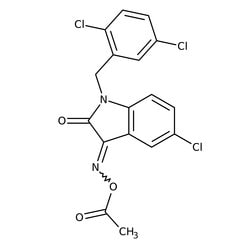
MilliporeSigma™ Calbiochem™ UCH-L1 Inhibitor
The UCH-L1 Inhibitor, also referenced under CAS 668467-91-2, controls the biological activity of UCH-L1. This small molecule/inhibitor is primarily used for Protease Inhibitors applications.
MilliporeSigma™ Calbiochem™ Hsp25 Kinase Inhibitor
The Hsp25 Kinase Inhibitor controls the biological activity of Hsp25 KInase. This small molecule/inhibitor is primarily used for Phosphorylation & Dephosphorylation applications.
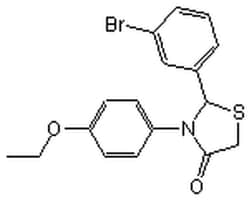
MilliporeSigma™ Calbiochem™ Arp2/3 Complex Inhibitor II, Inactive Control, CK-312
The Arp2/3 Complex Inhibitor II, Inactive Control, CK-312 controls the biological activity of Arp2/3. This small molecule/inhibitor is primarily used for Cell Structure applications.
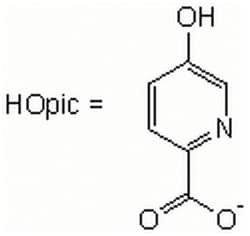
MilliporeSigma™ Calbiochem™ bpV(HOpic)
A potent phosphotyrosine phosphatase inhibitor.
MilliporeSigma™ Calbiochem™ Aniracetam
A positive allosteric modulator selective for AMPA receptors
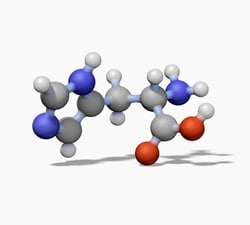
MilliporeSigma™ Calbiochem™ Urea Transporter B Inhibitor, UTBinh-14
A cell-permeable triazolothienopyrimidine compound that acts as a reversible urea transporter B-selective inhibitor (IC 50 =

MilliporeSigma™ Calbiochem™ Autophagy Inhibitor, 3-MA
Autophagy Inhibitor, 3-MA, CAS 5142-23-4, is a cell-permeable autophagic sequestration blocker. Acts as an inhibitor of III PI3-Kinase.
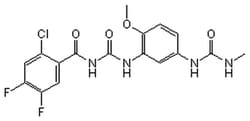
MilliporeSigma™ Calbiochem™ Glycogen Phosphorylase Inhibitor
The Glycogen Phosphorylase Inhibitor, also referenced under CAS 648926-15-2, controls the biological activity of Glycogen Phosphorylase.
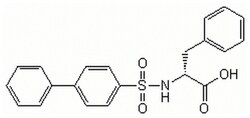
MilliporeSigma™ Calbiochem™ MMP-2/MMP-9 Inhibitor I
The MMP-2/MMP-9 Inhibitor I, also referenced under CAS 193807-58-8, controls the biological activity of MMP-2/MMP-9. This small molecule/inhibitor is primarily used for Protease Inhibitors applications.
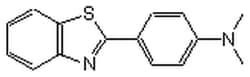
MilliporeSigma™ Calbiochem™ Luciferase Inhibitor II
The Luciferase Inhibitor II, also referenced under CAS 10205-56-8, controls the biological activity of Luciferase.
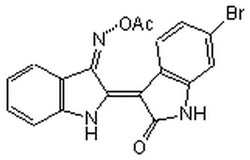
MilliporeSigma™ Calbiochem™ GSK-3 Inhibitor X
The GSK-3 Inhibitor X, also referenced under CAS 740841-15-0, controls the biological activity of GSK-3. This small molecule/inhibitor is primarily used for Phosphorylation & Dephosphorylation applications.

MilliporeSigma™ Calbiochem™ NDGA
A cell-permeable antioxidant and a selective lipoxygenase (LOX) inhibitor (IC50 = 200 nM, 30 μM, and 30 μM for 5-LOX, 12-LOX, and 15-LOX, respectively) over cyclooxygenase (IC50 = 100 μM).

MilliporeSigma™ Calbiochem™ GSK-3β Inhibitor VIII
The GSK-3β Inhibitor VIII, also referenced under CAS 487021-52-3, controls the biological activity of GSK-3β. This small molecule/inhibitor is primarily used for Phosphorylation & Dephosphorylation applications.
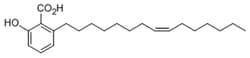
MilliporeSigma™ Calbiochem™ InSolution™ Ginkgolic Acid (15:1)
A 25 mM (2 mg/231 μl) sterile-filtered solution of Ginkgolic Acid (15:1) in DMSO.