
Agglutinins


Invitrogen™ Lens Culinaris (Edible Lentil) Agglutinin (LCA), fluorescein (FITC)
Lens Culinaris Agglutinin (LCA), fluorescein ( FITC), is a bright-green LCA-fluorophore conjugate that is sourced from a common edible lentil.


Invitrogen™ Ulex Europaeus (Gorse) Agglutinin I (UEA I), fluorescein (FITC)
Ulex Europaeus Agglutinin I (UEA I), fluorescein (FITC), is a bright-green UEA I-fluorophore conjugate.
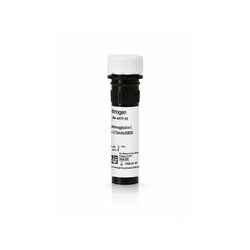
Invitrogen™ eBioscience™ Phytohemagglutinin-L (PHA-L) Solution (500X)
The Phytohemagglutinin-L (PHA-L) Solution (500X) is a ready to use solution of PHA-L in aqueous buffer.


MP Biomedicals™ Phytohemagglutinin, Phaseolus Vulgaris
Phytohemagglutinin, Phaseolus Vulgaris is crude Phaseolus vulgaris-P lectin (PHA-P) from the Red Kidney Bean.

MP Biomedicals™ Wheat Germ Agglutinin, 5mg
isolated from wheat germ, dissolved in 0.05 M Tris-HCl, 0.15 M NaCl buffer, pH 8.6 and purified by affinity chromatography
Invitrogen™ Dolichos Biflorus (Horse Gram) Agglutinin (DBA), fluorescein (FITC)
Bright-green DBA-fluorophor conjugate
MP Biomedicals™ Lotus tetragonolobus Agglutinin
Exhibits a specificity for α-L-fucose.

Abnova™ Wheat Germ agglutinin native Protein from wheat germ
Used for Enzyme, SDS-PAGE

Biotium Secondary Antibody FITC 1F8.1E4 CF594 1/EA
This product is prepared by labeling monoclonal mouse anti-fluorescein with CF and reg 594 dye CF and reg dyes are Biotiums line of next-generation fluorescent dyes with advantages in brightness photostability and conjugate specificity compared to other fluorescent dyes Deep-red fluorescent CF and reg 594 dye has excitation/emission at 593/614 nm

Vector Laboratories Wheat Germ Agglutinin (WGA) Unconjugated 10 mg
Wheat germ agglutinin (WGA) contains a group of closely related isolectins that bind N-acetylglucosamine (preferentially the dimers and trimers of this sugar) and oligosaccharides containing terminal N-acetylglucosamine or chitobiose, structures common to many serum and membrane glycoproteins. Bacterial cell wall peptidoglycans, chitin, cartilage glycosaminoglycans, and glycolipids can also bind WGA. Native WGA also interacts with some glycoproteins via sialic acid residues (see succinylated WGA). This unconjugated WGA is used for the purification of insulin receptors and for neuronal tracing and is supplied as a solution preserved with sodium azide. The recommended inhibiting/eluting sugar is chitin hydrolysate or 500 mM N-acetylglucosamine with salt and/or acid elution.

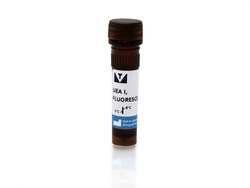
Vector Laboratories Ulex Europaeus Agglutinin I (UEA I) Fluorescein-labeled 5 mg
Ulex europaeus agglutinin I (UAE I) binds to many glycoproteins and glycolipids containing α-linked fucose residues, such as ABO blood group glycoconjugates. This lectin preferentially binds blood group O cells and has been used to determine secretor status. It is also an established marker for human endothelial cells. This fluorescein-labeled UAE I features a ratio of fluorophores to lectin protein that provides optimal staining (excitation 495 nm, emission 515 nm). Supplied as a solution essentially free of unconjugated fluorophores, it is preserved with sodium azide. The recommended inhibiting/eluting sugar is 50-100 mM L-fucose.

Vector Laboratories Ulex Europaeus Agglutinin I (UEA I) Rhodamine-labeled 2 mg
Ulex europaeus agglutinin I (UAE I) binds to glycoproteins and glycolipids containing α-linked fucose residues, such as ABO blood group glycoconjugates. This lectin preferentially binds blood group O cells and has been used to determine secretor status. It is also an established marker for human endothelial cells. This rhodamine-labeled UAE I features a ratio of fluorophore to lectin protein that provides optimal staining (excitation 575 nm, emission 600 nm) and is supplied in solution, essentially free of unconjugated fluorophore.

Vector Laboratories Wheat Germ Agglutinin (WGA) Agarose Bound 2 ml
Wheat germ agglutinin (WGA) is a group of closely related isolectins. WGA can bind to oligosaccharides containing terminal N-acetylglucosamine or chitobiose, structures which are common to many serum and membrane glycoproteins. Bacterial cell wall peptidoglycans, chitin, cartilage glycosaminoglycans, and glycolipids can also bind WGA. Native WGA has also been reported to interact with some glycoproteins via sialic acid residues. This lectin can be used for the purification of insulin receptors and for neuronal tracing. Agarose Bound WGA is prepared using affinity-purified lectins and heat stable, cross-linked 4% agarose beads. The attachment of the lectins through a hydrophilic spacer arm to the beads is carefully controlled to preserve lectin activity and minimize conformational changes of the bound lectins. The recommended inhibiting/eluting sugar is chitin hydrolysate or 500 mM N-acetylglucosamine. Salt and/or acid elution may also be required.