
Carbohydrates


Medchemexpress LLC Cdk1/Cyc B-IN-1 | 2459916-56-2 | 98.5% | 353.85 | 5 MG

CDK1/Cyc B-IN-1 is a selective inhibitor of the CDK1/Cyc B complex, exhibiting an IC50 of 97 nM. This compound induces apoptosis and G2/M cell cycle arrest. It demonstrates broad-spectrum cytotoxic activity across various cancer cell lines.
- Selective CDK1/Cyc B complex inhibitor.
- IC50 of 97 nM against CDK1-Cyclin B.
- Triggers apoptosis.
- Induces G2/M cell cycle arrest.
- Exhibits broad-spectrum cytotoxic action against cancer cell lines.
- Shows cytotoxic activity against HCT-116 and WI-38 cells with IC50 values of 5.33 ± 0.69 μM and 21.69 ± 1.04 μM respectively.


Medchemexpress LLC Protac BET-binding moiety 2 | 916493-82-8 | 99.8% | 10 MG
Small-molecule BET bromodomain inhibitor intended as the BET-binding ligand component in PROTAC constructs and for biochemical and cell-based research applications. Supplied as a solid or as a 10 mM solution in DMSO, with reported high purity and identifying registry information for compound verification.
- Functions as a BET bromodomain ligand for PROTAC design and target engagement studies.
- Available as solid powder and as a 10 mM solution in DMSO for assay flexibility.
- High reported purity suitable for research use.
- Characterized by CAS 916493-82-8 and molecular weight 444.89 for identification.
- Provided for research use only; not for human or clinical use.


Medchemexpress LLC 2H-1-benzopyran-2-one, 4-methyl-7-(β-D-xylopyranosyloxy)- | 6734-33-4 | 99.7% | 308.29 | 1 ML
4-Methylumbelliferyl-β-D-xylopyranoside is a chemical compound utilized as a substrate for studying β-Xylosidase activity. It demonstrates burst and steady-state kinetics, indicating the rapid hydrolysis of its glycosidic bonds.
- Functions as a substrate for β-xylosidase activity research
- Exhibits burst and steady-state kinetics
- Supports rapid hydrolysis of glycosidic bonds
- Features a purity of 99.7%
- Has a molecular weight of 308.29
- Appears as a white to off-white solid
- Recommended powder storage: -20°C for 3 years, 4°C for 2 years
- Recommended solvent storage: -80°C for 6 months, -20°C for 1 month
- Soluble in DMSO at 125 mg/mL
Medchemexpress LLC Intestinal Alkaline Phosphatase Antibody (YA1559) | 10 UL
The Intestinal Alkaline Phosphatase Antibody (YA1559) is a rabbit-derived, non-conjugated IgG monoclonal antibody designed to target Intestinal Alkaline Phosphatase. This enzyme is a key component of the gut mucosal defense system, functioning in the detoxification of lipopolysaccharide and preventing bacterial translocation within the gut. It can hydrolyze various phosphate compounds and is localized to the cell membrane as a homodimer.
- Derived from rabbit
- Monoclonal and recombinant
- Non-conjugated
- Reacts with human samples
- Formulated in 50 mM Tris-Glycine (pH 7.4), 0.15 M NaCl, 40% Glycerol, 0.01% sodium azide and 0.05% BSA
- Liquid appearance
- Immunogen derived from human intestinal alkaline phosphatase
- Ships with blue ice

Medchemexpress LLC Sodium zirconium cyclosilicate | 17141-74-1 | 95.0% | 50 MG
Sodium zirconium cyclosilicate is an inorganic, microporous zirconium silicate cation exchanger used in research to selectively remove excess potassium (K+) in vivo. It is supplied for preclinical and biochemical studies, including hyperkalemia and chronic kidney disease research, and is provided at laboratory-grade purity.
- Selective potassium binding for ion-exchange studies.
- Non-absorbed inorganic sorbent suitable for in vivo models.
- Supplied at 95.0% purity for consistent results.
- Available in small research pack sizes from 5 mg to 500 mg.
- Useful for biochemical assays and renal disease research.

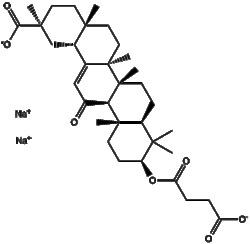
Apexbio Technology LLC Carbenoxolone disodium 7421-40-1 50mg
Carbenoxolone disodium (CAS 7421-40-1) is a small-molecule inhibitor targeting 11 -hydroxysteroid dehydrogenase (11 -HSD) It is designed to modulate glucocorticoid metabolism by suppressing the interconversion of corticosteroid hormones thereby regulating glucocorticoid access to steroid receptors Carbenoxolone disodium exerts its biological activity through inhibition of 11 -HSD enzymatic function In vitro studies demonstrate inhibitory activity with reported IC50 values ranging from 10 30 M depending on experimental conditions and target tissue Based on these pharmacological properties Carbenoxolone disodium holds research potential in neuroendocrine and cardiovascular studies exploring glucocorticoid-mediated signaling pathways
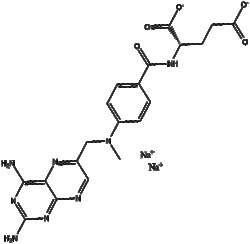
Apexbio Technology LLC Methotrexate disodium 7413-34-5 100mg
Methotrexate disodium (CAS 7413-34-5) is a small-molecule inhibitor targeting dihydrofolate reductase (DHFR) It is designed to inhibit DHFR activity thereby disrupting the enzymatic reduction of dihydrofolate to tetrahydrofolate and impairing DNA and RNA biosynthesis Methotrexate disodium exerts its biological activity primarily through DHFR inhibition In in vitro studies methotrexate disodium demonstrates inhibitory activity with an IC50 value in the nanomolar range (approximately 5 to 50 nM depending on assay conditions and cell models) Based on these pharmacological properties methotrexate disodium holds research potential in autoimmune disorders such as rheumatoid arthritis and psoriasis as well as in antineoplastic studies involving acute lymphoblastic leukemia