
Protease Inhibitors and Phosphatase Inhibitors

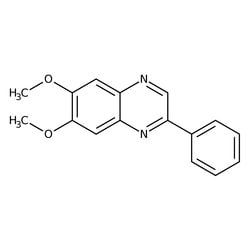
MilliporeSigma™ Calbiochem™ AG 1296
A cell-permeable, reversible, and ATP-competitive, inhibitor of PDGF receptor kinase and blocks signaling of human PDGF α-receptors and β-receptors.

MilliporeSigma™ Calbiochem™ Caspase-9 Inhibitor I
The Caspase-9 Inhibitor I controls the biological activity of Caspase-9. This small molecule/inhibitor is primarily used for Cancer applications.
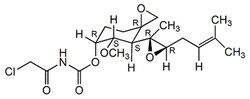
MilliporeSigma™ Calbiochem™ TNP-470
TNP-470, CAS 129298-91-5, is a cell-permeable Fumagillin (Cat. No. 344845) analog that specifically inhibits MetAP2 methionine aminopeptidase activity (IC50 = 1nM for human MetAP2).

Novus Biologicals™ Actinomycin D Inhibitor

Low molecular weight, organic compound that may help regulate biological process.

Novus Biologicals™ Staurosporine Inhibitor
Low molecular weight, organic compound that may help regulate biological process.

Novus Biologicals™ Z-DEVD-FMK Inhibitor
Low molecular weight, organic compound that may help regulate biological process.

Novus Biologicals™ Doxorubicin Hydrochloride Inhibitor
Low molecular weight, organic compound that may help regulate biological process.

MilliporeSigma™ Calbiochem™ Calpeptin
A cell-permeable calpain inhibitor (ID50 = 52 nM for calpain-1; ID50 = 34 nM for calpain-2; ID50 = 138 nM for papain).
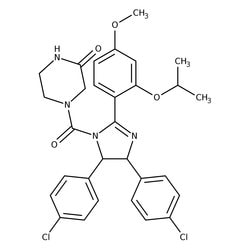
Novus Biologicals™ Nutlin-3 Inhibitor
Low molecular weight, organic compound that may help regulate biological process.
Novus Biologicals™ AZD 5582 Dihydrochloride Inhibitor
Low molecular weight, organic compound that may help regulate biological process.

Novus Biologicals™ Z-VAD-FMK Inhibitor
Low molecular weight, organic compound that may help regulate biological process.
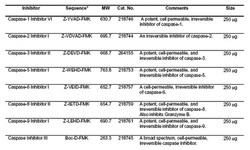
MilliporeSigma™ Calbiochem™ Caspase Inhibitor Set II
The Caspase Inhibitor Set II controls the biological activity of Caspase. This collection of small molecule/inhibitor is primarily used for Cancer applications.

MilliporeSigma™ Calbiochem™ Smac-N7 Peptide
A peptide that contains the N-terminal seven residues of Smac (Second Mitochondria-derived Activator of Caspases, also known as DIABLO) and promotes procaspase-3 activation at around 10μM.
MilliporeSigma™ Calbiochem™ PSA Substrate, Fluorogenic
An excellent fluorogenic substrate for assaying the proteolytic activity of prostate-specific antigen (PSA).