
Lipids and Lipid Derivatives


Medchemexpress LLC C24:1-ceramide (d18:1/24:1) | 54164-50-0 | MFCD02259277 | 99.9% | 648.10 g·mol⁻¹ | C42H81NO3 | 5 MG

C24:1-Ceramide (d18:1/24:1) is a long-chain sphingolipid commonly used in membrane biology, lipidomics, and formulation research. It functions as a reference standard and a structural lipid in liposome and lipid nanoparticle preparations for in vitro and analytical studies.
- High chemical purity reported by distributors (approximately 99.9%).
- Molecular formula C42H81NO3 and molecular weight ~648.10 g·mol-1.
- Solid form provided in small research pack sizes (mg scale) for analytical use.
- Suitable for membrane and lipidomics studies, and lipid nanoparticle formulation.
- Recommended storage at -20 °C to preserve stability.
- Supplied with CAS identifier 54164-50-0 for unambiguous reference.


Medchemexpress LLC C18:1-Ceramide | 5966-28-9 | 99.93% | C36H69NO3 | 100 MG
C18:1-Ceramide is a ceramide subspecies that can be used in the study of type 2 diabetes.
- High purity: 99.93%
- White to off-white solid appearance
- Shipping at room temperature in continental US
- Storage at 4°C, protected from light

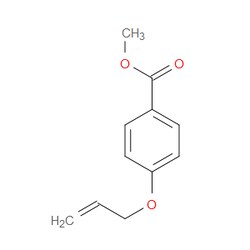
Aobchem Methyl 4-(allyloxy)benzoate | ≥95% | CAS 35750-24-4 | C11H12O3 | 1g
Methyl 4-(allyloxy)benzoate | ≥95% | CAS 35750-24-4 | C11H12O3 | 1g
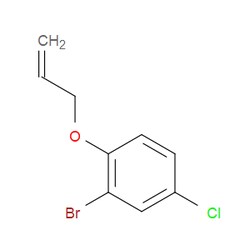
Aobchem 1-(Allyloxy)-2-bromo-4-chlorobenzene | ≥95% | CAS 68223-98-3 | C9H8BrClO | 500mg
1-(Allyloxy)-2-bromo-4-chlorobenzene | ≥95% | CAS 68223-98-3 | C9H8BrClO | 500mg
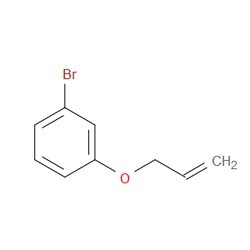
Aobchem 1-(Allyloxy)-3-bromobenzene | ≥97% | CAS 41388-50-5 | C9H9BrO | 10g
1-(Allyloxy)-3-bromobenzene | ≥97% | CAS 41388-50-5 | C9H9BrO | 10g

Medchemexpress LLC (Rac)-1,2-Distearoyl-sn-glycero-3-phosphatidylglycerol sodium | 124011-52-5 | 99.97% | 50 MG
(Rac)-1,2-Distearoyl-sn-Glycero-3-Phosphatidylglycerol (sodium) is an anionic phospholipid. It can be studied for drug delivery and the synthesis of liposomes. Liposomes containing this compound can induce Tregs that are specific for their cargo. This compound is taken up by antigen-presenting cells through complement component 1q (C1q).
- Anionic phospholipid.
- Can be used for drug delivery and liposome synthesis.
- Liposomes containing this compound can induce antigen-specific Tregs.
- Taken up by antigen-presenting cells via complement component 1q (C1q).

Medchemexpress LLC 1,3-distearoyl-2-chloropropanediol | 26787-56-4 | >99.0% | 643.46 g·mol⁻¹ | C39H75ClO4 | 5 MG
1,3-Distearoyl-2-chloropropanediol is a stearic-acid ester lipid reagent provided for laboratory research as an analytical standard. The compound is supplied in small milligram quantities with supporting documentation for analytical use, and labeled variants are available for specialized studies.
- High chemical purity: >99.0%.
- Molecular formula: C39H75ClO4.
- Molecular weight: 643.46 g·mol⁻¹.
- Available in small mg package sizes (example: 5 mg).
- Isotopically labeled variants available for analytical applications.
- Datasheet, certificate of analysis, and safety data sheet are provided.

Medchemexpress LLC 1,3-distearoyl-2-chloropropanediol | 1329796-49-7 | 99.1% | 648.49 g/mol | C39H70D5ClO4 | 10 MG
1,3-Distearoyl-2-chloropropanediol is a fatty-acid ester used as an analytical standard and reagent in lipid research, method development, and quantitative analyses. It is supplied in small milligram quantities and is available in non-deuterated and deuterated forms for isotope-labeling workflows.
- High purity for analytical and reference use.
- Available in small milligram quantities for method development.
- Deuterated variants available for isotope-labeling and quantification.
- Suitable for mass spectrometry and chromatographic analyses of lipids.
- Stable solid form for convenient handling and storage.
- Documentation available including COA and SDS to support quality control.
Apexbio Technology LLC 1-2-Distearoyl-sn-glycerol
1 2-Distearoyl-sn-glycerol (CAS No 10567-21-2) is a diacylglycerol utilized in biomedical research particularly in the study of lipid signaling pathways As a glycerolipid it plays a vital role in the activation of protein kinase C (PKC) which is crucial for various cellular processes including cell growth and apoptosis Common in vitro activities include modulation of PKC in the nanomolar to low micromolar range It is frequently used in cell models to investigate lipid metabolism and signal transduction In animal studies it aids in understanding lipid-related disorders and drug screening Experimental concentrations typically depend on the specific research design