
Diterpenoids


Crocetin, free acid, >90%, MP Biomedicals™
CAS: 27876-94-4 Molecular Formula: C20H24O4 Molecular Weight (g/mol): 328.408 InChI Key: PANKHBYNKQNAHN-MQQNZMFNSA-N Synonym: crocetin,trans-crocetin,8,8'-diapocarotenedioic acid,natural yellow 6,8,8'-diapocarotene-8,8'-dioic acid,8,8'-diapo-psi,psi-carotenedioic acid,ccris 7484,unii-20tc155l9c,2e,4e,6e,8e,10e,12e,14e-2,6,11,15-tetramethylhexadeca-2,4,6,8,10,12,14-heptaenedioic acid,.alpha.-crocetin PubChem CID: 5281232 ChEBI: CHEBI:3918 IUPAC Name: (2E,4E,6E,8E,10E,12E,14E)-2,6,11,15-tetramethylhexadeca-2,4,6,8,10,12,14-heptaenedioic acid SMILES: CC(=CC=CC=C(C)C=CC=C(C)C(=O)O)C=CC=C(C)C(=O)O

Phytyl Acetate (cis- and trans- mixture) 88.0+%, TCI America™
CAS: 10236-16-5 Molecular Formula: C22H42O2 Molecular Weight (g/mol): 338.58 MDL Number: MFCD00673238 InChI Key: JIGCTXHIECXYRJ-ILWBRPEASA-N Synonym: Acetic Acid 3,7,11,15-Tetramethyl-2-hexadecenyl Ester, 3,7,11,15-Tetramethyl-2-hexadecenyl Acetate PubChem CID: 53425386 IUPAC Name: (2E,7R,11R)-3,7,11,15-tetramethylhexadec-2-en-1-yl acetate SMILES: CC(C)CCC[C@@H](C)CCC[C@@H](C)CCC\C(C)=C\COC(C)=O

Cayman Chemical Mulberry leaf Phytol 250g
A degradation product of chlorophyll that is converted to phytanic acid, which can accumulate to toxic levels in a number of metabolic disorders; activates RXRs (Kis range from 2.3-67.2 µM) and promotes the activity of PPAR/RXR heterodimers


Cayman Chemical Mulberry leaf Phytol 100g
A degradation product of chlorophyll that is converted to phytanic acid, which can accumulate to toxic levels in a number of metabolic disorders; activates RXRs (Kis range from 2.3-67.2 µM) and promotes the activity of PPAR/RXR heterodimers

Medchemexpress LLC Aphidicolin | 38966-21-1 | MFCD00083214 | 1 ML

Aphidicolin is an inhibitor of DNA polymerase α and δ, which prevents mitotic cell division by interfering with DNA polymerase activity. It is an antibiotic produced by the mold Cephalosporium aphidicola. Aphidicolin inhibits cellular deoxyribonucleic acid synthesis and the growth of herpes simplex virus. It also demonstrates anti-orthopoxvirus activity and enhances apoptosis induced by arabinosyl nucleosides in a human promyelocytic leukemia cell line.
- Inhibits DNA polymerase α and δ
- Prevents mitotic cell division
- Inhibits cellular deoxyribonucleic acid synthesis
- Inhibits the growth of herpes simplex virus
- Shows anti-orthopoxvirus activity
- Enhances apoptosis induced by arabinosyl nucleosides in human promyelocytic leukemia cells
Medchemexpress LLC Aphidicolin | 38966-21-1 | 50 MG
Aphidicolin is an inhibitor of DNA polymerase α and δ, which prevents mitotic cell division by interfering with DNA polymerase activity. It is an antibiotic produced by the mold *Cephalosporium aphidicola* and inhibits cellular deoxyribonucleic acid synthesis and the growth of herpes simplex virus. Aphidicolin also exhibits anti-orthopoxvirus activity and potentiates apoptosis induced by arabinosyl nucleosides in a human promyelocytic leukemia cell line.
- Inhibitor of DNA polymerase α and δ
- Prevents mitotic cell division
- Antibiotic produced by *Cephalosporium aphidicola*
- Inhibits cellular deoxyribonucleic acid synthesis
- Inhibits growth of herpes simplex virus
- Exhibits anti-orthopoxvirus activity
- Potentiates apoptosis induced by arabinosyl nucleosides
Medchemexpress LLC Aphidicolin | 38966-21-1 | 1 MG
Aphidicolin is an inhibitor of DNA polymerase α and δ, preventing mitotic cell division by interfering with DNA polymerase activity. It is an antibiotic produced by the mold *Cephalosporium aphidicola*, inhibiting cellular deoxyribonucleic acid synthesis and the growth of herpes simplex virus. Aphidicolin also exhibits anti-orthopoxvirus activity and potentiates apoptosis induced by arabinosyl nucleosides in a human promyelocytic leukemia cell line.
- Inhibits DNA polymerase α and δ
- Prevents mitotic cell division
- Interferes with DNA polymerase activity
- Antibiotic produced by *Cephalosporium aphidicola*
- Inhibits cellular deoxyribonucleic acid synthesis
- Inhibits growth of herpes simplex virus
- Exhibits anti-orthopoxvirus activity
- Potentiates apoptosis induced by arabinosyl nucleosides
TARGETMOL CHEMICALS INC Aphidicolin 1MG
Aphidicolin, an antibiotic derived from the mold Cephalosporium aphidicola, is a potent inhibitor of DNA (deoxyribonucleic acid) synthesis, effectively hindering the proliferation of herpes simplex virus[2]. It targets DNA polymerase alpha and delta, disrupting mitotic cell division by affecting DNA polymerase activity[1]. Additionally, aphidicolin enhances apoptosis when combined with arabinosyl nucleosides in a human promyelocytic leukemia cell line[3].
Medchemexpress LLC Aphidicolin | 38966-21-1 | MFCD00083214 | 25 MG
Aphidicolin is an inhibitor of DNA polymerase α and δ, which functions by interfering with DNA polymerase activity to prevent mitotic cell division. This antibiotic, originating from the mold Cephalosporium aphidicola, is known for its ability to inhibit cellular deoxyribonucleic acid synthesis and the growth of herpes simplex virus. Furthermore, it demonstrates anti-orthopoxvirus activity and enhances apoptosis when induced by arabinosyl nucleosides in a human promyelocytic leukemia cell line.
- Inhibits DNA polymerase α and δ
- Prevents mitotic cell division
- Functions as an antibiotic
- Inhibits cellular deoxyribonucleic acid synthesis
- Inhibits growth of herpes simplex virus
- Exhibits anti-orthopoxvirus activity
- Potentiates apoptosis induced by arabinosyl nucleosides
- Targets DNA/RNA synthesis, HSV, and apoptosis pathways
- Applied in infection and inflammation/immunology research

Medchemexpress LLC Paclitaxel-2′-succinate NHS ester | 245110-80-9 | 98.8% | 1051.05 | 1 MG
Paclitaxel-2′-succinate NHS ester is a derivative of paclitaxel that features a succinic acid linker, with the carboxyl group activated by an NHS ester. The NHS ester group demonstrates high reactivity with amino or hydroxyl groups.
- Suitable for conjugation with various molecules, including peptides, proteins, antibodies, enzymes, or polymers.
- Intended for use in the development of nanomedicines.
- Used in cancer therapy research.
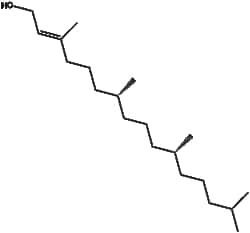
Apexbio Technology LLC Phytol 150-86-7 250g
Phytol is a naturally occurring diterpene alcohol derived from chlorophyll metabolism serving as an activator for retinoid X receptors (RXRs) RXRs are nuclear hormone receptors implicated in transcriptional regulation and cellular differentiation through ligand-dependent signaling pathways involving vitamins and hormones Phytol activates RXRs displaying Ki values ranging from 2 3 to 67 2 M In mammals phytol is metabolized to phytanic acid a reaction regulated by peroxisome proliferator-activated receptor (PPAR ) Additionally phytol interacts with GABA A receptors exhibiting sedative and anxiolytic properties and has been investigated as an antischistosomal candidate in animal models
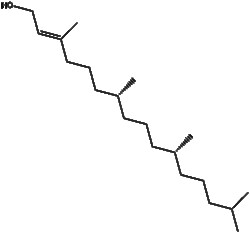
Apexbio Technology LLC Phytol 150-86-7 100g
Phytol is a naturally occurring diterpene alcohol derived from chlorophyll metabolism serving as an activator for retinoid X receptors (RXRs) RXRs are nuclear hormone receptors implicated in transcriptional regulation and cellular differentiation through ligand-dependent signaling pathways involving vitamins and hormones Phytol activates RXRs displaying Ki values ranging from 2 3 to 67 2 M In mammals phytol is metabolized to phytanic acid a reaction regulated by peroxisome proliferator-activated receptor (PPAR ) Additionally phytol interacts with GABA A receptors exhibiting sedative and anxiolytic properties and has been investigated as an antischistosomal candidate in animal models
Medchemexpress LLC Aphidicolin | 38966-21-1 | 10 MG
Aphidicolin is an inhibitor of DNA polymerase α and δ, preventing mitotic cell division by interfering with DNA polymerase activity. This antibiotic is produced by the mold *Cephalosporium aphidicola*. It inhibits cellular deoxyribonucleic acid synthesis, the growth of herpes simplex virus, and exhibits anti-orthopoxvirus activity. Additionally, Aphidicolin can potentiate apoptosis induced by arabinosyl nucleosides in human promyelocytic leukemia cell lines.
- Inhibits DNA polymerase α and δ.
- Functions as an antibiotic from *Cephalosporium aphidicola*.
- Exhibits antiviral activity against herpes simplex virus and orthopoxvirus.
- Modulates cell cycle, arresting cells at G2 phase.
- Induces apoptosis and inhibits cell proliferation via the p53-GADD45β pathway.
- Aphidicolin glycinate demonstrates anti-tumor activity in murine models.
Medchemexpress LLC Aphidicolin | 38966-21-1 | 5 MG
Aphidicolin is an inhibitor of DNA polymerase α and δ, which prevents mitotic cell division by interfering with DNA polymerase activity. It is an antibiotic produced by the mold Cephalosporium aphidicola. Aphidicolin inhibits cellular deoxyribonucleic acid synthesis and the growth of herpes simplex virus. It also demonstrates anti-orthopoxvirus activity and enhances apoptosis induced by arabinosyl nucleosides in a human promyelocytic leukemia cell line.
- Inhibits DNA polymerase α and δ
- Prevents mitotic cell division
- Antibiotic from Cephalosporium aphidicola
- Inhibits DNA synthesis and herpes simplex virus growth
- Exhibits anti-orthopoxvirus activity
- Enhances apoptosis
- Selectively kills neuroblastoma cells
- Arrests cell cycle at G2 phase
- Inhibits cell proliferation via p53-GADD45β pathway
- Inhibits Varicella-zoster virus (VZV)