
Sugar acids and derivatives

![Alkali Scientific MUG [4 Methylumbelliferyl β D glucuronide Trihydrate], 1 G](https://assets.fishersci.com/TFS-Assets/CCG/product-images/5000661658.jpg-250.jpg)
Alkali Scientific MUG [4 Methylumbelliferyl β D glucuronide Trihydrate], 1 G
Methylumbelliferyl β-D Glucuronide Trihydrate, 1 g is a highly sensitive biochemical reagent used in the detection and study of glucuronidase enzyme activity. The substrate is hydrolyzed by glucuronidases to produce a fluorescent product that can be quantified, making it valuable for enzyme assays in biochemical research. It is used in clinical diagnostics, microbiological testing, and enzyme kinetics studies to measure glucuronidase activity. The high purity and sensitivity of this reagent make it suitable for detecting low enzyme concentrations, ensuring precise and reproducible results in applications that require accurate enzyme activity quantification.


Medchemexpress LLC 4-methylumbelliferyl-α-D-galactopyranoside | 38597-12-5 | MFCD00063278 | 99.8% | 338.31 g/mol | C16H18O8 | 50 MG

4-Methylumbelliferyl-α-D-galactopyranoside is a blue pro-fluorogenic substrate used to measure α-galactosidase A (GLA) activity. Enzymatic hydrolysis releases galactose and fluorescent 4-methylumbelliferone (4-MU), enabling sensitive fluorometric detection of enzyme activity in biochemical and cell-based assays. Supplied as a high-purity powder for research use only.
- Fluorogenic substrate for α-galactosidase assays
- Releases fluorescent 4-methylumbelliferone upon enzymatic cleavage
- High purity (99.8%) suitable for enzymatic assays
- Supplied as 50 mg powder
- Recommended storage: powder at -20°C to maximize stability
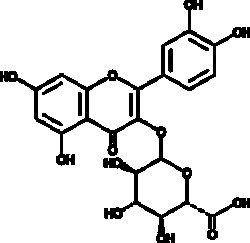
Cayman Chemical QuercetIn 3-O-glucuronIde 25mg
A pharmacologically active flavonol glucuronide; reduced rat immobility time in the forced swim test (0.6 mg/kg); reduced stress-induced hyperthermia in mice (1.2 mg/kg)
![Alkali Scientific 4 Methylumbelliferyl β D Galactopyranoside [4 Methylumbelliferyl β D Galactoside], 5 G](https://assets.fishersci.com/TFS-Assets/CCG/product-images/5000659927.jpg-250.jpg)
Alkali Scientific 4 Methylumbelliferyl β D Galactopyranoside [4 Methylumbelliferyl β D Galactoside], 5 G
Methylumbelliferyl Galactopyranoside (5g) is a high-purity reagent designed for large-scale biochemical analysis, particularly in enzyme assays targeting galactosidase enzymes. This 5g size is ideal for high-throughput enzyme screening and other laboratory experiments requiring larger quantities of substrate. The reagent is widely used in studies of galactose metabolism, enzyme kinetics, and carbohydrate metabolism. It is useful for enzyme-linked assays, microbiological studies, and clinical research, particularly in applications focusing on the hydrolysis of galactose and lactose derivatives. The high purity of this reagent ensures reliable and consistent results in biochemical research.

Medchemexpress LLC Protac BET degrader-1 | 2093386-22-0 | 99.4% | 871.90 g/mol | C44H45N11O9 | 1 ML
PROTAC BET Degrader-1 is a proteolysis-targeting chimera that links a Cereblon ligand to a BET-family ligand to promote ubiquitination and proteasomal degradation of BET proteins BRD2, BRD3, and BRD4. It is used in biochemical and cellular assays to investigate BET protein degradation and downstream epigenetic effects.
- Induces selective degradation of BRD2, BRD3, and BRD4 at low nanomolar concentrations.
- Provided as a 10 mM solution in DMSO, 1 mL vial.
- High purity (99.4% by LCMS).
- Molecular formula C44H45N11O9; molecular weight 871.90 g/mol.
- Storage: powder -20°C for long term; in solvent -80°C recommended.

Medchemexpress LLC 4-Methylumbelliferyl β-D-cellobioside | 72626-61-0 | MFCD00063279 | 99.4% | 500.45 | 100 MG
4-Methylumbelliferyl β-D-cellobioside is a substrate for cellulase. It can be hydrolyzed to produce fluorescent 4-methylumbelliferone, which is used to study the kinetics of cellulases.
- Substrate for cellulase
- Produces fluorescent 4-methylumbelliferone
- Used to study the kinetics of cellulases

Medchemexpress LLC 4-Methylumbelliferyl | 440.61 | C28H40O4 | 50MG
4-Methylumbelliferyl oleate is a fluorogenic substrate for acid and alkaline lipases 4-Methylumbelliferyl oleate is cleaved by lipases liberating 4-Methylumbelliferyl (Ex/Em 320/450 nm)[1][2]
Apexbio Technology LLC HyperTrap Heparin FF Column 5x1ml
HyperTrap Heparin FF Column is an affinity chromatography medium designed for the purification of heparin-binding biomolecules The column exploits the strong ionic and specific interactions between immobilized heparin and target proteins such as growth factors coagulation factors and certain enzymes enabling selective retention and efficient separation from complex biological mixtures This tool is widely utilized in the isolation and characterization of heparin-binding proteins investigation of protein glycosaminoglycan interactions and purification of bioactive factors for downstream functional assays and structural analyses

Medchemexpress LLC D-Biotinol 25mg
D-Biotinol is the nutrition of Lactobacillus arabinosus L casei or Saccharomyces cerevisiae D-Biotinol replaces the D-biotin (HY-B0511) in saving egg white induced biotin deficiency in rats D-Biotinol is orally active and displays to be converted to biotin by rats[1]

Medchemexpress LLC β-D-glucopyranosiduronic acid p-nitrophenyl carbonate derivative | 894095-98-8 | 99.6% | 913.83 g/mol | C45H43N3O18 | 1 G
β-D-glucuronide-pNP-carbonate is a glucuronide-cleavable carbonate linker used to attach payloads to antibodies for research-scale antibody-drug conjugate (ADC) synthesis. It is supplied as a purified small-molecule reagent for linker-payload assembly and analytical characterization.
- Cleavable glucuronide-based linker responsive to glycosidase cleavage.
- Reported purity around 99.6%.
- Molecular formula C45H43N3O18; molecular weight 913.83 g/mol.
- Available in small-scale packaging including 1 G; larger quantities available on request.
- Supporting documents include datasheet, certificate of analysis, and safety data sheet.

Medchemexpress LLC D-Iditol | 25878-23-3 | MFCD09951922 | 98.0% | 182.17 g/mol | C6H14O6 | 10 MG
D-Iditol is a fungal metabolite and sugar alcohol that accumulates in galactokinase deficiency. It is supplied as a white to off-white solid with ≥98.0% purity for research use only and is commonly used as an endogenous metabolite reference or reagent in biochemical and metabolic studies.
- High purity: 98.0% (manufacturer specification).
- Molecular weight 182.17 g/mol; formula C6H14O6.
- White to off-white solid suitable for analytical and synthetic applications.
- Stable when stored sealed at 4°C; in solvent: -80°C (6 months) or -20°C (1 month).
- Suitable for biochemical, metabolic, and analytical research workflows.
AdipoGen 3OH-C10-L-HSL
Chemical. CAS 192883-12-8. Formula C14H25NO4. MW 271.35. Synthetic. N-3-hydroxydecanoyl-L-homoserine lactone is a small diffusible signaling molecule secreted by various bacteria and involved in quorum sensing, thereby controlling gene expression and affecting cellular metabolism. This lactone is produced via lactonolysis from 3-oxodecanoyl-homoserine lactone, altering quorum sensing or contributing to quorum quenching. The applications of this molecule include regulation of virulence and exoproteases.
Medchemexpress LLC Azido-PEG4-beta-D-glucose | 1609083-15-9 | 99.9% | 381.38 | 25 MG
Azido-PEG4-beta-D-glucose is a PEG-based PROTAC linker that facilitates the synthesis of PROTACs. This click chemistry reagent contains an Azide group, allowing it to undergo copper-catalyzed azide-alkyne cycloaddition (CuAAc) reactions with alkyne-containing molecules, as well as strain-promoted alkyne-azide cycloaddition (SPAAC) reactions with DBCO or BCN groups.
- PEG-based PROTAC linker
- Utilized in PROTAC synthesis
- Functions as a click chemistry reagent
- Contains an azide functional group
- Participates in copper-catalyzed azide-alkyne cycloaddition (CuAAc)
- Enables strain-promoted alkyne-azide cycloaddition (SPAAC)
- Intended for research use only
Medchemexpress LLC Sapintoxin D | 80998-07-8 | 99.9% | 10 MG
Sapintoxin D is a fluorescent phorbol ester used to study the activation of protein kinase C (PKC). It functions as a calcium-dependent PKC activator, making it suitable for various research applications in cell biology and biochemistry.
- Fluorescent phorbol ester
- Activates protein kinase C (PKC)
- Calcium-dependent mechanism
- Appears as a white to off-white solid
- High purity of 99.91%
- Soluble in DMSO for in vitro studies

Medchemexpress LLC Tetrahydrouridine dihydrate | 18771-50-1 | MFCD00063468 | 99.8% | 284.26 g/mol | C9H20N2O8 | 10 MG
Tetrahydrouridine dihydrate is the dihydrated form of tetrahydrouridine, a potent competitive inhibitor of cytidine deaminase (CDA). Supplied as a white to off-white solid for research use, it is used to inhibit cytidine deamination, support studies of DNA/RNA synthesis pathways, and sensitize carcinoma cells to cytidine analog chemotherapeutics such as gemcitabine.
- Potent competitive inhibitor of cytidine deaminase (CDA).
- High purity (≈99.8%) suitable for research applications.
- Dihydrate form; molecular weight 284.26 g/mol.
- White to off-white solid, convenient for analytical and biological assays.
- Stable when stored as powder at -20°C (long-term storage).
- Available in small assay sizes for laboratory use.