
Carbonyl compounds



Medchemexpress LLC Z-Fg-nho-bzome | 180313-86-4 | 98.0% | 505.52 | C27H27N3O7 | 5mg

Z-FG-NHO-BzOME is a cysteine protease inhibitor that selectively inhibits cathepsin B cathepsin L cathepsin S and papain[1]


Gold Biotechnology Inc trans Zeatin 1 g
trans -Zeatin is a naturally occurring cytokinin plant growth regulator routinely used in plant tissue culture to induce cell division and shoot formation trans -zeatin is freely soluble in acetic acid and water
Medchemexpress LLC Nonanal | 124-19-6 | 10 ML
Nonanal is a saturated fatty aldehyde that demonstrates antidiarrhoeal activity. It appears as a colorless to light yellow liquid with a purity of 99.42%. This product is for research use only.
- Shows significant activity against B. cereus and L. monocytogenes, with MIC values of 7.8 μg/ml for both
- Demonstrates an inhibitory effect on castor oil-induced diarrhoea in mice
- Molecular weight of 142.24 and chemical formula C9H18O
- Density of 0.827 g/cm³
Medchemexpress LLC 1-Piperazineethanol, 4-[(3E)-3-(2-chloro-9H-thioxanthen-9-ylidene)propyl]- | 53772-84-2 | 99.4% | C22H25ClN2OS | 25 MG
Trans-Clopenthixol is an off-white to light yellow solid. It is an antibiotic that does not have a neuroleptic effect and is intended for research use only, as it has not been fully validated for medical applications.
- Inhibits Pseudomonas aeruginosa and Plasmodium falciparum in vitro.
- Product complies with given specifications.

Medchemexpress LLC FG-3246 FOR46 1mg | 1mg
FG-3246 (FOR46) is a humanized antibody expressed in CHO cells that targets CD46 FG-3246 (FOR46) has a huIgG1 heavy chain and a hu light chain with a predicted molecular weight (MW) of 143 6 kDa The isotype control for FG-3246 (FOR46) can be referenced as Human IgG1 kappa Isotype Control (HY-P99001)
Sigma Aldrich Fine Chemicals Biosciences Hexanal d12 98 atom D 96250MG
Hexanal d12 98 atom D 96250MG

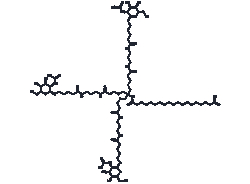
TARGETMOL CHEMICALS INC TRI-GALNAC-COOH 5MG
Also available in 1 mg 10 mg 25 mg 50 mg 100 mg 500 mg 1 mL 10 mM (in DMSO) and bulk. Please contact Fisher for quotes. Tri-GalNAc-COOH is a ligand for the asialoglycoprotein receptor (ASGPR) commonly employed in Lysosome Targeting Chimera (LYTAC) investigations. purity: 99%
Medchemexpress LLC HKSOX-1r (5/6-mixture) - Fluorescent probe, spiro[isobenzofuran-1,9'-xanthen] derivative | 98.4% | 25 MG
HKSOX-1r (5/6-mixture) is a fluorescent probe for imaging and detection of endogenous superoxide in live cells and in vivo.
- Exhibits excellent selectivity and sensitivity towards superoxide anion radical.
Medchemexpress LLC Octanal | 124-13-0 | 1 ML
Octanal is a fragrant aldehyde known for its antioxidant and antibacterial properties. It demonstrates antifungal effects against G. citri-aurantii by disrupting cell membrane integrity and causing leakage of cellular components. Additionally, it exhibits cytotoxicity towards HeLa cells.
- Has antioxidant activity
- Exhibits antibacterial activity
- Shows antifungal effects against G. citri-aurantii
- Increases extracellular conductivity and enhances membrane permeability in G. citri-aurantii mycelium
- Decreases lipid content in G. citri-aurantii mycelium
- Exhibits cytotoxicity towards HeLa cells
Medchemexpress LLC N-trans-Feruloyltyramine | 66648-43-9 | 1 MG
N-trans-Feruloyltyramine is an alkaloid and a potent antioxidant. It improves H2O2-induced intracellular Reactive Oxygen Species (ROS) generation and decreases apoptosis. It has potential for research in oxidative stress-related neurodegenerative conditions and cancer.
- Protects cells against H2O2-induced toxicity.
- Significantly reduces Bax and activated caspase-3 levels in H2O2-treated SK-N-SH cells.
- Significantly improves an H2O2-mediated increase in ROS levels.
- Does not affect viability of SK-N-SH cells.
- Shows proliferation inhibition on HepG2 cells.
Medchemexpress LLC Trans-2-hexenal | 6728-26-3 | 99.6% | 10 G
trans-2-Hexenal ((E)-2-Hexenal) is a volatile compound widely present in fresh plants, vegetables, and fruits, known for its distinct leafy aroma. It exhibits antifungal activity and can also hinder the germination of soybean seeds and the growth of seedlings. Additionally, trans-2-Hexenal is utilized for determining low-molecular-weight carbonyl compounds that react with biological nucleophiles in biological samples.
- Widely present in fresh plants, vegetables, and fruits
- Known for its distinct leafy aroma
- Exhibits antifungal activity
- Can hinder the germination of soybean seeds and the growth of seedlings
- Utilized for determining low-molecular-weight carbonyl compounds that react with biological nucleophiles in biological samples

Sigma Aldrich Fine Chemicals Biosciences trans-2-Hexen-1-al >=95%, FCC, FG | 6728-26-3 | MFCD00007008 | 1KG
trans-2-Hexen-1-al >=95%, FCC, FG | Purity: >=95% | Mol Wt: 98.14 | 6728-26-3 | MFCD00007008 | 1KG
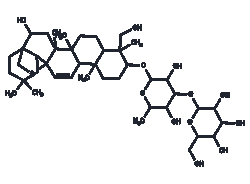
TARGETMOL CHEMICALS INC SAIKOSAPONIN D 25MG
Also available in 5 mg 10 mg 50 mg 100 mg 1 mL 10 mM (in DMSO) and bulk. Please contact Fisher for quotes. Saikosaponin D is a novel SERCA inhibitor by inhibiting NF-(kappa)B and STAT3 signaling to protect against acetaminophen-induced hepatotoxicity. purity: 99%
Medchemexpress LLC Nonanal (Standard) | 124-19-6 | 10 MM 1 ML
Nonanal is a saturated fatty aldehyde with antidiarrhoeal activity. It shows significant activity against B. cereus and L. monocytogenes with MIC values of 7.8 μg/ml. In vivo, Nonanal has a significant inhibitory effect on mice with diarrhea induced by castor oil.
- Molecular weight: 142.24
- Formula: C9H18O
- Appearance: Liquid
- Color: Colorless to light yellow
- Purity: 99.42%
- Significant activity against B. cereus and L. monocytogenes
- Inhibitory effect on mice with diarrhea induced by castor oil