
Sugar acids and derivatives


Medchemexpress LLC Chrysosplenol D | 14965-20-9 | MFCD01548059 | 99.9% | 360.31 | 10 MG

Chrysosplenol D is a methoxy flavonoid known for inducing ERK1/2-mediated apoptosis in triple-negative human breast cancer cells. It demonstrates anti-inflammatory properties and moderate antitrypanosomal activities.
- Inhibits cell viability in CaCo2 cells.
- Selectively inhibits viability of TNBC cell lines.
- Induces cell cycle aberrations and apoptosis in breast cancer cells.
- Shows antitrypanosomal activity against T.b. brucei.
- Inhibits tumor growth on chick chorioallantoic membranes.
- Protects against LPS-induced systemic inflammatory response syndrome in mice.
- Inhibits croton oil-induced ear edema in mice.


Selleck Chemical LLC Heparin sodium S1346-1g
Heparin sodium a sulfated polysaccharide belonging to the family of glycosaminoglycans has numerous important biological activities associated with its interaction with diverse proteins Heparin is used as an anticoagulant primarily through its interaction with AT III by enhancing AT-IIImediated inhibition of blood coagulation factors including thrombin and factor Xa Heparin prevents the induction of autophagy

Medchemexpress LLC 4-Methylumbelliferyl phosphate | 3368-04-5 | 99.8% | 256.15 | 1 ML
4-Methylumbelliferyl phosphate (4-MUP) is an anionic organophosphate and a fluorogenic substrate for both acid and alkaline phosphatase. It is also recognized as a nerve agent simulant, primarily for research use.
- Anionic organophosphate
- Fluorogenic substrate for acid and alkaline phosphatase
- Nerve agent simulant
- Used in serum acid phosphatase assays

Medchemexpress LLC Dodecanedioic acid-d4 | 97543-02-7 | 234.33 | 10 MG
Dodecanedioic acid-d4 is the deuterium labeled version of Dodecanedioic acid. Dodecanedioic acid is an orally active straight-chain dicarboxylic acid that acts as an alternative energy substrate. It can be rapidly oxidized during exercise, reducing muscle fatigue without stimulating insulin secretion, and also exhibits blood glucose-lowering activity in non-insulin-dependent diabetes mellitus.
- Deuterium labeled compound for quantitative tracing during drug development.
- Reduces muscle fatigue during exercise.
- Exhibits blood glucose-lowering activity.

Medchemexpress LLC Sapintoxin D | 80998-07-8 | 99.9% | 10 MG
Sapintoxin D is a fluorescent phorbol ester used to study the activation of protein kinase C (PKC). It functions as a calcium-dependent PKC activator, making it suitable for various research applications in cell biology and biochemistry.
- Fluorescent phorbol ester
- Activates protein kinase C (PKC)
- Calcium-dependent mechanism
- Appears as a white to off-white solid
- High purity of 99.91%
- Soluble in DMSO for in vitro studies
Apexbio Technology LLC Beta-Lapachone 4707-32-8 10mg
Beta-Lapachone (CAS 4707-32-8) is a small molecule inhibitor of DNA topoisomerase I In DNA unwinding assays beta-Lapachone suppresses topoisomerase I-mediated DNA relaxation at concentrations as low as 1 M without inhibiting topoisomerase II or inducing topoisomerase I-dependent DNA cleavage It exhibits broad cytotoxicity against human cancer cell lines such as AD2780s HT-29 DLD G480 and MCF-7 with IC50 values ranging from 2 to 5 M The compound induces cell death through cytochrome c release triggering both apoptosis and necrosis and affects cell cycle progression causing S-phase and G2/M arrest in different carcinoma cell models Beta-Lapachone is widely utilized in studies investigating topoisomerase I inhibition cancer cell cytotoxicity and cell cycle regulation

Medchemexpress LLC 4-methylumbelliferyl alpha-L-arabinofuranoside | 77471-44-4 | MFCD00057308 | 99.9% | C15H16O7 | 10MG
4-Methylumbelliferyl alpha-L-arabinofuranoside is a fluorogenic glycosidase substrate used to measure α-L-arabinofuranosidase activity. Enzymatic cleavage releases the fluorescent reporter 4-methylumbelliferone, enabling sensitive fluorometric assays for enzyme kinetics, inhibitor screening, and biochemical studies.
- Fluorogenic substrate for α-L-arabinofuranosidase assays.
- Releases 4-methylumbelliferone for high-sensitivity fluorometric detection.
- Suitable for enzyme kinetics, inhibitor screening, and activity profiling.
- High purity improves assay reproducibility and signal-to-noise ratio.
- Available in small, research-scale quantities for laboratory use.

Medchemexpress LLC 4-methylumbelliferyl β-D-cellobioside | 72626-61-0 | MFCD00063279 | >98.0% | C22H28O13 | 10MG
4-Methylumbelliferyl β-D-cellobioside is a fluorogenic glycoside substrate used to measure cellulase and related β-glucosidase activity. Enzymatic hydrolysis liberates 4-methylumbelliferone, a fluorescent reporter commonly quantified in biochemical and enzymatic assays for activity and kinetics studies.
- Fluorogenic substrate for cellulase and β-glucosidase assays.
- Releases fluorescent 4-methylumbelliferone upon enzymatic cleavage.
- High purity (>98.0%) suitable for quantitative assays.
- Known molecular weight (500.45 g·mol⁻¹) and chemical formula (C22H28O13).
- Available in small research-scale quantities for laboratory use.
Medchemexpress LLC Arnicolide D | 34532-68-8 | 10 MG
Arnicolide D is a sesquiterpene lactone isolated from Centipeda minima. It demonstrates cytotoxicity against tumor cells, inducing cell cycle arrest, apoptosis, and oncosis. Arnicolide D exhibits anti-tumor activity.
- Antitumor agent: Is cytotoxic to tumor cells and has anti-tumor activity.
- Induces cell cycle arrest and apoptosis in nasopharyngeal carcinoma cells by activating the caspase signaling pathway and inhibiting the PI3K/AKT/mTOR and STAT3 signaling pathways.
- Induces endoplasmic reticulum stress-mediated and ROS-dependent oncosis in hepatocellular carcinoma cells via ATF4 and CHOP.
- Demonstrates anti-melanoma effects and inhibits the NF-κB pathway in an in vivo B16F10 allograft mouse model.
- High purity of 99.69%.
- Solid, white to off-white appearance.

Medchemexpress LLC D-Moses (D-45) | 2084850-77-9 | >98.0% | 360.46 g/mol | C21H24N6 | 10 MG
D-Moses (D-45) is the D-enantiomer of L-Moses and is provided as an inactive control compound for studies of the p300/CBP-associated factor (PCAF) bromodomain. It is intended for research use and is supplied as a powder with reported high purity for biochemical and cellular assays (CAS 2084850-77-9).
- Inactive enantiomer control for bromodomain assays.
- Suitable for biochemical and cell-based experiments.
- Reported purity greater than 98%.
- Available in small, precise milligram sizes for screening.
- Powder form with limited aqueous solubility; soluble in common organic solvents.
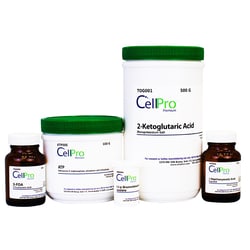
Alkali Scientific MUG [4 Methylumbelliferyl β D glucuronide Trihydrate], 1 G
Methylumbelliferyl β-D Glucuronide Trihydrate, 1 g is a highly sensitive biochemical reagent used in the detection and study of glucuronidase enzyme activity. The substrate is hydrolyzed by glucuronidases to produce a fluorescent product that can be quantified, making it valuable for enzyme assays in biochemical research. It is used in clinical diagnostics, microbiological testing, and enzyme kinetics studies to measure glucuronidase activity. The high purity and sensitivity of this reagent make it suitable for detecting low enzyme concentrations, ensuring precise and reproducible results in applications that require accurate enzyme activity quantification.

Medchemexpress LLC IL-1RA/IL-1F3 Porci 10ug | 10ug
IL-1RA/IL-1F3 proteins are powerful anti-inflammatory antagonists in the interleukin 1 family specifically targeting the pro-inflammatory cytokines IL1B and IL1A This protein counteracts the inflammatory effects of IL1 playing a critical role in preventing immune dysregulation and preventing uncontrolled systemic inflammation triggered by a variety of innate irritants including pathogens IL-1RA/IL-1F3 Protein Porcine is the recombinant Porcine-derived IL-1RA/IL-1F3 protein expressed by E coli with tag free
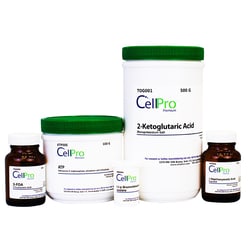
Alkali Scientific D Glucuronic Acid Sodium Salt Monohydrate, 100 G
D Glucuronic Acid Sodium Salt Monohydrate is a high-quality biochemical reagent, available in a 100-gram quantity for larger-scale laboratory applications. This reagent is crucial for research involving carbohydrate metabolism, glycosylation, and the synthesis of glycosaminoglycans. Glucuronic acid is a fundamental building block in many biological processes, particularly in detoxification reactions where it forms conjugates to increase water solubility. It is used in both academic and industrial laboratories for its role in the biosynthesis of complex carbohydrates and as a substrate in enzymatic reactions. The sodium salt monohydrate form provides excellent solubility and stability in aqueous solutions.

Medchemexpress LLC 4-methylumbelliferyl α-D-glucopyranoside | 17833-43-1 | MFCD00067661 | 100.0% | 338.31 g·mol⁻¹ | C16H18O8 | 5 MG
4-Methylumbelliferyl α-D-glucopyranoside is a fluorogenic substrate for α-glucosidase that releases 4-methylumbelliferone upon enzymatic hydrolysis. The liberated fluorophore enables sensitive, quantitative measurement of GAA activity in biochemical assays and newborn screening workflows for lysosomal storage disorders. The reagent is provided in small research quantities and requires controlled storage to preserve stability.
- Fluorogenic substrate for α-glucosidase assays.
- Enzymatic cleavage yields fluorescent 4-methylumbelliferone for quantitation.
- Excitation ~360 nm, emission ~445-455 nm (read at ~450 nm).
- Applicable to newborn screening and research on lysosomal storage disorders.
- Supplied in small research-scale quantities; follow storage recommendations.
- Storage: store at 4°C under inert gas; in solution, store at -80°C or -20°C as specified.

Medchemexpress LLC 4-methylumbelliferyl stearate | 79408-85-8 | MFCD00057311 | 99.0% | 442.63 g/mol | C28H42O4 | 250 MG
4-Methylumbelliferyl stearate is a fluorogenic biochemical reagent used as a substrate for esterase and lipase assays. Enzymatic hydrolysis releases the fluorescent 4-methylumbelliferone (4-MU), enabling sensitive, quantitative measurement of enzyme activity in biochemical and cell-based research. For research use only.
- Releases fluorescent 4-methylumbelliferone upon hydrolysis.
- Enables sensitive, quantitative enzyme activity assays.
- Suitable for esterase and lipase substrate assays.
- Available in multiple sample sizes for assay optimization.
- Stable when stored sealed at room temperature.
- Supplied with purity and batch certificate information.