
Dimethyl Sulfoxide

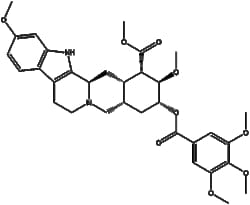
Apexbio Technology LLC Reserpine 50-55-5 10mM (in 1mL DMSO)
Reserpine a naturally derived alkaloid isolated from plants of the genus Rauvolfia functions primarily through the inhibition of vesicular monoamine transporter 2 (VMAT2) By blocking VMAT2-mediated uptake reserpine causes depletion of monoamine neurotransmitters such as dopamine norepinephrine and serotonin from synaptic storage vesicles In biochemical assays reserpine inhibits VMAT2 activity with an IC50 value typically ranging from 30-50 nM depending on assay specifics In biomedical and pharmacological research this compound is commonly utilized to model neurotransmitter depletion mechanisms in vitro and in animal models facilitating studies on monoamine-related neurological disorders neurotransmission pathways as well as serotonergic dopaminergic and adrenergic signaling


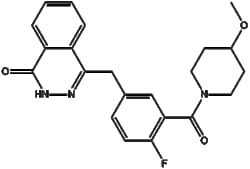
Apexbio Technology LLC AZD2461 1174043-16-3 10mM (in 1mL DMSO)
AZD2461 (CAS 1174043-16-3) is a novel small-molecule inhibitor of poly(ADP-ribose) polymerase (PARP) exhibiting potency with an IC50 of 5 nM PARP enzymes are pivotal regulators of DNA repair and apoptosis-associated processes In breast cancer cell lines such as SKBR-3 and MCF-7 AZD2461 reduces cell viability in a concentration- and time-dependent manner arresting cells predominantly in the G2 phase In BRCA1-deficient mouse KB1P tumors AZD2461 disrupts PARP activity regardless of P-glycoprotein-mediated resistance to other inhibitors like olaparib highlighting its utility in overcoming drug resistance and elucidating DNA repair pathways in cancer research
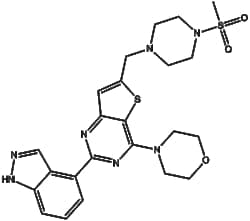
Apexbio Technology LLC GDC-0941 957054-30-7 10mM (in 1mL DMSO)
GDC-0941 (CAS 957054-30-7) is a selective small-molecule inhibitor of class I phosphoinositide 3-kinase (PI3K) a critical component involved in the PI3K/Akt signaling pathway frequently dysregulated in cancer By competitively binding to the ATP-binding site of PI3K GDC-0941 inhibits generation of the downstream signaling molecule phosphatidylinositol-3 4 5-trisphosphate (PIP3) Exhibiting high selectivity against p110 / (IC50 approx 3 nM) and moderate selectivity for p110 (33 nM) and p110 (75 nM) GDC-0941 has demonstrated antiproliferative activity across diverse tumor cell lines in vitro (e g A2780 PC3 U87MG) and tumor growth inhibition in xenograft cancer models supporting its utility in cancer research
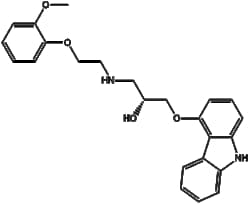
Apexbio Technology LLC Carvedilol 72956-09-3 10mM (in 1mL DMSO)
Carvedilol is an antagonist targeting 1- and -adrenergic receptors employed in research on cardiovascular diseases especially congestive heart failure and hypertension Mechanistically carvedilol blocks adrenergic receptor-mediated signaling influencing sympathetic nervous system activity Additionally carvedilol exhibits antioxidative properties in vitro studies demonstrate suppression of Fe2 -induced lipid peroxidation (IC50 8 1 M) protection of -tocopherol depletion due to Fe2 exposure (IC50 17 6 M) and reduction of hydroxyl radical-derived DMPO-OH signals (IC50 25 M) It also inhibits proliferation (IC50 0 3-2 0 M) and migration (IC50 3 M) in vascular smooth muscle cells induced by platelet-derived growth factor supporting investigation of vascular remodeling processes
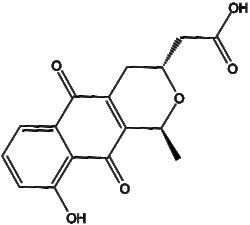
Apexbio Technology LLC Nanaomycin A 52934-83-5 10mM (in 1mL DMSO)
Nanaomycin A is a selective inhibitor targeting DNA methyltransferase 3B (DNMT3B) with an IC50 of approximately 500 nM It acts by specifically inhibiting DNMT3B-mediated DNA methylation without notably affecting DNMT1 activity In cell-based studies employing cancer cell lines such as HCT116 A549 and HL60 treatment with Nanaomycin A reduced global DNA methylation levels and reactivated transcription of tumor suppressor genes previously silenced via promoter hypermethylation Its use in epigenetics-related research includes quantitative assessment of DNMT3B function investigation of DNA methylation regulation mechanisms and evaluation of gene reactivation consequent to DNMT3B inhibition
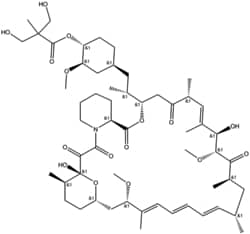
Apexbio Technology LLC Temsirolimus 162635-04-3 10mM (in 1mL DMSO)
Temsirolimus (CCI-779) is an ester analog of rapamycin functioning as an inhibitor of the mammalian target of rapamycin (mTOR) The compound suppresses mTOR signaling pathways thus inhibiting cellular proliferation and growth In preclinical studies on breast cancer cell lines Temsirolimus displayed inhibitory activities with reported IC50 values of 0 6 nM in BT-474 cells 0 7 nM in MDA-MB-468 and SKBR-3 cells and 50 nM in MCF-7 cells It has been examined in xenograft models of tumors with PTEN mutations and multiple myeloma for investigating pathways related to cell-cycle progression and proliferation regulated by mTOR
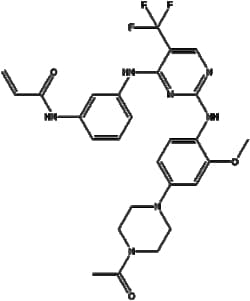
Apexbio Technology LLC CO-1686 (AVL-301) 1374640-70-6 10mM (in 1mL DMSO)
CO-1686 (AVL-301 CAS 1374640-70-6) is an orally delivered irreversible small molecule inhibitor targeting mutated epidermal growth factor receptor (EGFR) It functions by forming a covalent bond at cysteine 797 in the ATP-binding domain of EGFR selectively inhibiting mutant variants such as L858R/T790M with reported IC50 values below 0 51 nM CO-1686 preferentially targets mutant EGFR over wild-type demonstrating approximately 22-fold selectivity Preclinical studies using non-small cell lung cancer (NSCLC) cell lines and xenograft models carrying EGFR mutations showed potent anti-proliferative and tumor regression effects Thus CO-1686 represents a valuable research tool in studying mutant EGFR-mediated oncogenesis
Apexbio Technology LLC SB742457 607742-69-8 10mM (in 1mL DMSO)
SB742457 (CAS 607742-69-8) is a selective antagonist of the serotonin 5-HT6 receptor with high affinity demonstrated by a reported pKi of 9 63 Due to effective brain penetration and oral bioavailability SB742457 has shown the ability to reverse cognitive deficits induced by the cholinergic antagonist scopolamine in rodent novel object recognition tests Acutely administered SB742457 increases extracellular glutamate and acetylcholine levels in the rat medial prefrontal cortex Given these pharmacological properties SB742457 is investigated in cognitive enhancement studies notably related to Alzheimer s disease research
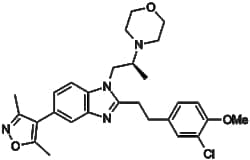
Apexbio Technology LLC SGC-CBP30 1613695-14-9 10mM (in 1mL DMSO)
SGC-CBP30 (CAS 1613695-14-9) is a selective small-molecule inhibitor targeting the bromodomains of CREB-binding protein (CREBBP) and E1A-binding protein p300 (EP300) exhibiting IC50 values of 21 nM and 38 nM respectively Both EP300 and CREBBP function as transcriptional coactivators involved in diverse regulatory processes including cell proliferation differentiation and transcription factor activation Through its inhibitory action SGC-CBP30 is utilized widely in biomedical research to investigate the molecular roles of CREBBP/EP300 as well as in studies examining related signaling pathways in tumor biology and cellular regulation
Apexbio Technology LLC Prucalopride 179474-81-8 10mM (in 1mL DMSO)
Prucalopride (CAS 179474-81-8) is a selective serotonin 5-HT4 receptor agonist with high affinity for both 5-HT4A and 5-HT4B receptor subtypes demonstrating Ki values of 2 5 nM and 8 nM respectively It displays substantial selectivity exceeding 290-fold against other serotonin receptor classes By activating 5-HT4 receptors prucalopride promotes gastrointestinal motility making it a valuable tool compound for investigating serotonergic mechanisms underlying gastrointestinal disorders and motility regulation Currently prucalopride is evaluated in Phase 3 clinical trials
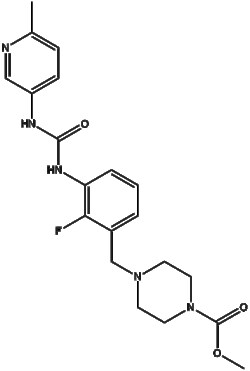
Apexbio Technology LLC Omecamtiv mecarbil 873697-71-3 10mM (in 1mL DMSO)
Omecamtiv mecarbil is a cardiac-specific myosin activator targeting the S1 domain of cardiac myosin It acts by accelerating the release of phosphate (Pi) from the cardiac myosin S1 domain upon actin binding thus facilitating transition from weak to strong actin-bound conformations This mechanistic action enhances cardiomyocyte contractility independent of calcium transient alterations In preclinical studies omecamtiv mecarbil enhances contraction force in isolated cardiomyocytes at submicromolar concentrations and improves cardiac function in animal models of systolic dysfunction without influencing myocardial oxygen consumption Researchers utilize omecamtiv mecarbil to investigate therapeutic approaches in treating systolic heart failure
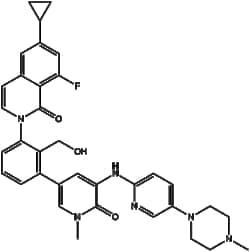
Apexbio Technology LLC RN486 1242156-23-5 10mM (in 1mL DMSO)
RN486 (CAS 1242156-23-5) is a reversible and selective inhibitor of Bruton s tyrosine kinase (BTK) an enzyme prominently expressed in immune cells including B lymphocytes and macrophages BTK participates critically in B-cell receptor (BCR) and Fc receptor (FcR) signaling pathways influencing B-cell differentiation proliferation and antibody production RN486 exhibits potent inhibitory effects (IC50 4 0 nM) and effectively diminishes signaling events B-cell activation and IgG synthesis in cellular assays In animal models RN486 suppresses autoimmune and inflammatory responses reducing disease progression in lupus (NZB NZW mice) and arthritis indicating its utility in autoimmune research
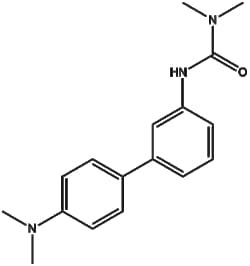
Apexbio Technology LLC Atglistatin 1469924-27-3 10mM (in 1mL DMSO)
Atglistatin (CAS 1469924-27-3) is a small-molecule inhibitor selective for adipose triglyceride lipase (ATGL) an enzyme that catalyzes the rate-limiting step in triglyceride hydrolysis releasing fatty acids from cellular triglyceride stores Atglistatin inhibits ATGL activity competitively with an IC50 of 0 7 M and Ki of 355 nM In mouse white adipose tissue lysates atglistatin decreased triglyceride hydrolase activity by approximately 78% effectively reducing fatty acid and glycerol release This compound serves as a valuable tool in lipid metabolism and metabolic disease research
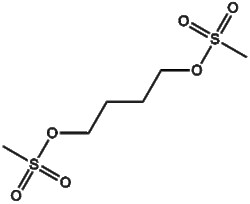
Apexbio Technology LLC Busulfan 55-98-1 10mM (in 1mL DMSO)
Busulfan is a DNA alkylating agent widely used in biomedical research as an anticancer compound It functions by forming cross-links on guanine bases within DNA leading to DNA damage and subsequent inhibition of cell growth and proliferation In vitro studies reveal that exposure to busulfan (IC50 range approximately 7 5 120 M) promotes cellular senescence in normal human fibroblast cell lines mediated through increased reactive oxygen species (ROS) and sustained activation of MAPK signaling pathways Additionally busulfan is utilized in fertility and reproductive biology research due to its ability to induce apoptosis in male germ cells reducing germ cell populations in experimental mouse models